
Moore County Warrant Checks
Moore County posts no public warrant search of its own, so a warrant check here runs through two offices. The Circuit Court Clerk holds the case file and can pin down the court and case number; the Moore County Sheriff's Department tracks service status, which agency is handling the warrant, and where to ask about surrender or bond. A blank web result settles nothing either way. Before you call, gather your full legal name, date of birth, citation or case number, the court name, and any notice you received. If you missed a date, ask whether the file sits in General Sessions, Circuit Court, Juvenile Court, or the Metro Moore municipal division. The Tennessee AOC clerk finder routes warrant questions to the clerk in the county where the case began, and the same clerk-finder instructions give a statewide route for a local case question. That official page is the starting point for a Moore County warrant lookup.
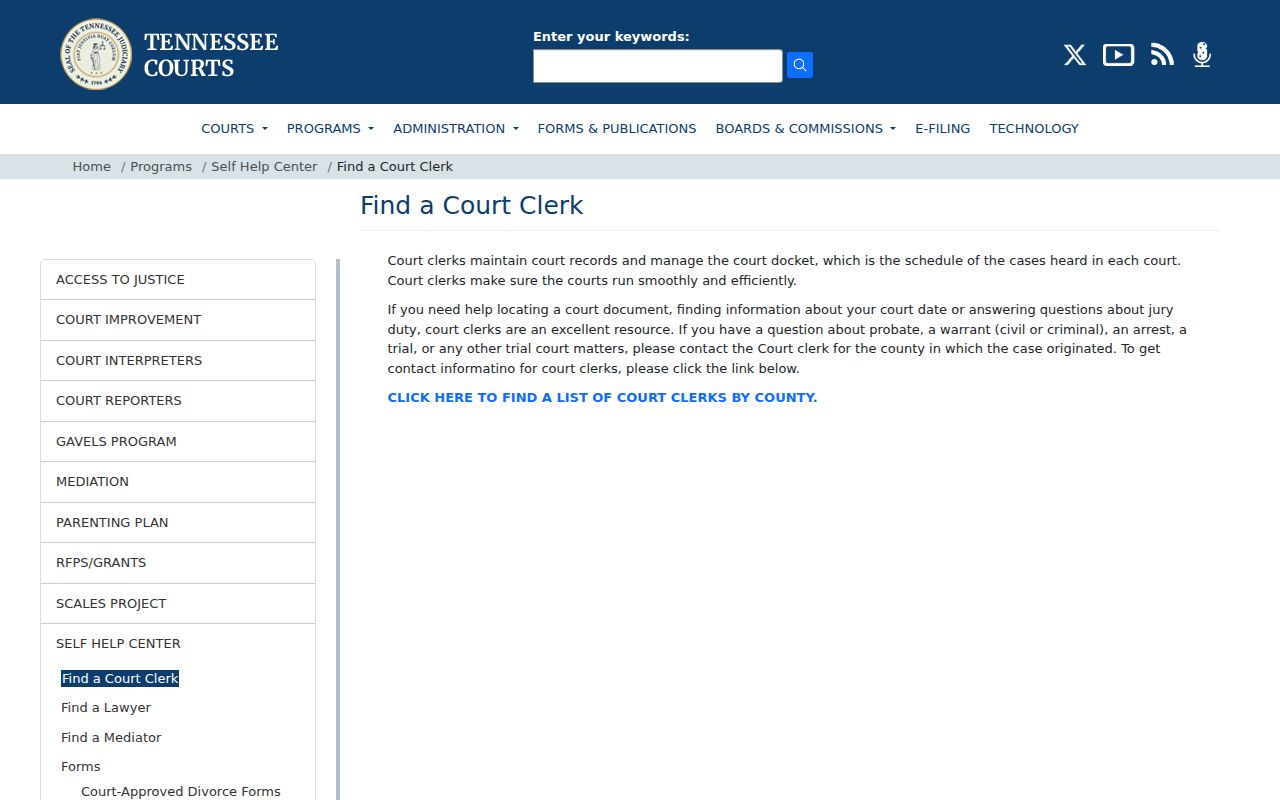
Use the clerk's route to reach the Moore County office holding the file, then confirm service with the sheriff.
- Gather your own name, birth date, case or citation number, and the court date if known.
- Call the Circuit Court Clerk at 931-759-7208 to locate the file and ask which court issued the process.
- Call the sheriff at 931-759-7323 for service status and surrender or bond routing.
- Ask the clerk for the current TPRA policy and Public Records Request Coordinator if you need a written record.
- Use TBI or AOC online tools only for their stated scope, then confirm any warrant question with the court and sheriff.
No Moore County Warrant Portal Was Located
The official source review found no sheriff search page, active-warrant roster, dedicated warrant phone line, payment page, or app. The sheriff's published contact is the direct service and status route. Ask whether an internal check exists, whether another agency holds the warrant, and which court can confirm a case entry.
The TBI Criminal Justice Directory can help identify public-safety agencies by county, city, and type. It does not search cases or warrants. The distinction matters in a small county where a directory result can be mistaken for a live case lookup.
The TBI Criminal Justice Directory image shows agency search controls, not warrant results. Use it to identify an office, then call that office through its official contact listing.
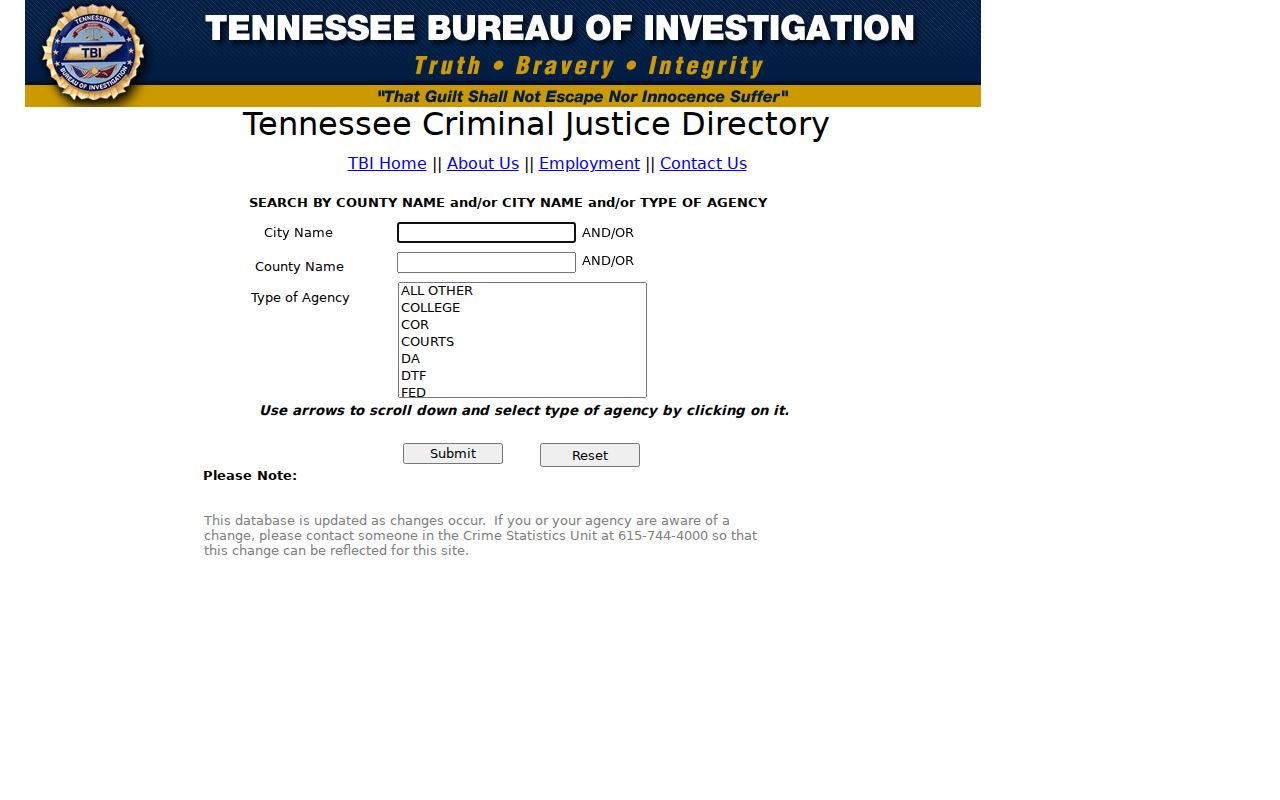
Moore County publishes no public warrant list, and a directory search confirms no one's status.
Warrants in Moore County: The Main Types
Tennessee court records use several terms, and the issuing court is what matters. An arrest warrant follows a sworn complaint and probable-cause review. A bench warrant or capias can follow a missed setting, contempt, or a bond problem. Traffic cases may create a court warrant plus a separate failure-to-satisfy-citation notice. A search warrant authorizes one search; it is not a public name lookup.
| Warrant Type | How It Arises | Who Issues It |
|---|---|---|
| Arrest warrant | Sworn complaint and probable-cause finding | Magistrate or authorized clerk |
| Bench warrant | Missed setting or court-order problem | The court handling the case |
| Traffic warrant | Missed date or unsatisfied citation | General Sessions or Metro municipal division |
| Search warrant | Probable cause to search a described place or property | Issuing judge or magistrate |
Moore Courts and the Sheriff Hold Different Records
In Moore County, the court and the sheriff hold different records. The court controls the case file, the warrant order, the next date, and any recall. The sheriff answers service and custody questions. A clerk's file can show an order before any agency service record catches up, and a sheriff's confirmation never replaces the court's order. When a result affects a planned appearance or surrender, contact both. The Tennessee court hierarchy page describes the state's trial and limited-jurisdiction courts; it lists no Moore County live warrants. In Moore, General Sessions handles much of the traffic and misdemeanor docket, Circuit Court holds the felony criminal files, and Juvenile Court records carry special limits. Use the hierarchy page to match your case to the right kind of court.
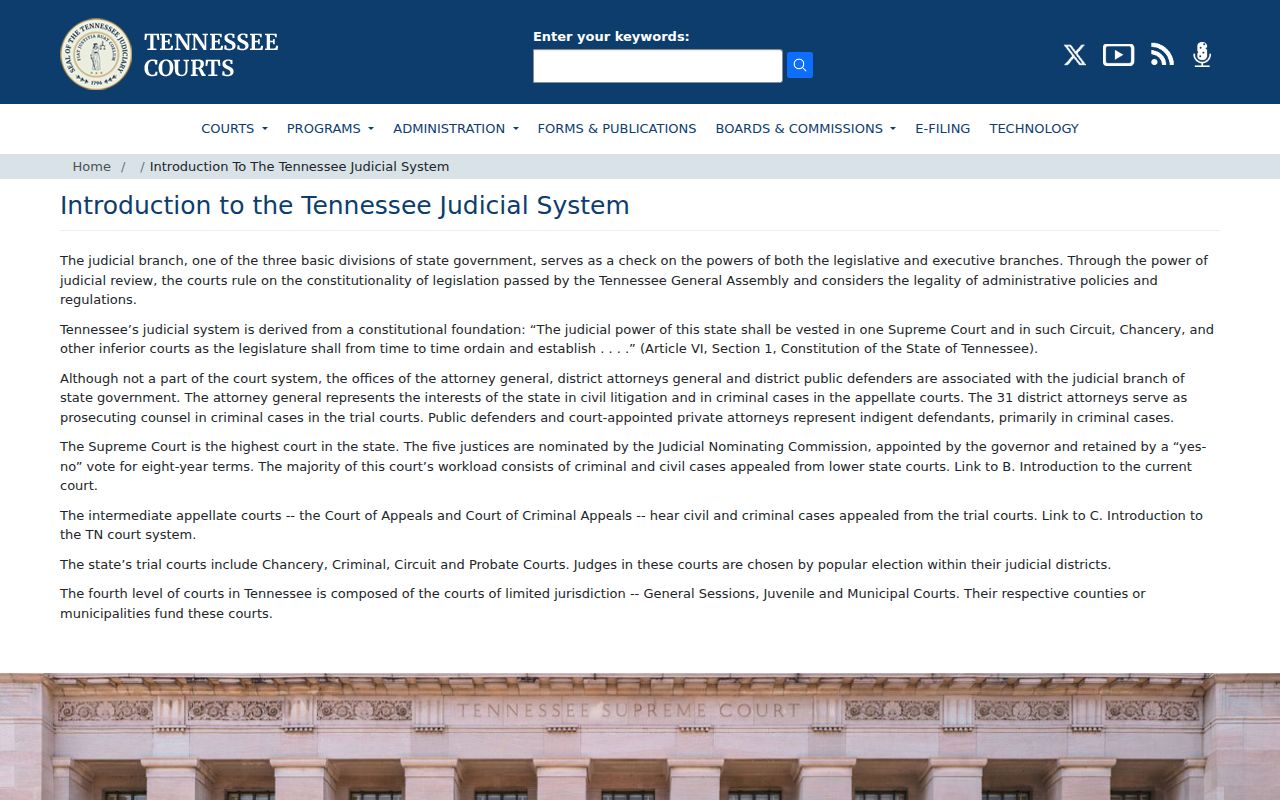
Ask the Circuit Court Clerk to route a case when its division is unclear.
Moore County Warrant Records: What They Show
Statewide AOC forms show the common fields on a warrant. Moore County posts no public database and no local number format. A warrant may sit in the court file or in the sheriff's service record. Ask the office that holds it for the exact document and its status, and do not infer a local prefix or code from another county's form.
| Case / warrant number | Moore format not published; the AOC model includes a case number. |
|---|---|
| Person and charge | Name, offense or statute, and any affidavit tied to an arrest warrant. |
| Issuing court | Identifies the judge, clerk, or judicial commissioner responsible for the order. |
| Bond | Amount and conditions are case-specific; no Moore schedule was located. |
| Service return | May show executed or not found; not found is not the same as recalled. |
| Status | Ask whether the court recalled or quashed it and whether the sheriff updated service status. |
TBI TORIS and Appellate History Are Different Tools
TBI TORIS is a $29 name-based criminal-history service, not a live warrant search. Its result cannot tell you whether a Moore County warrant is active, served, or recalled. The official TORIS page describes the service itself. AOC Public Case History covers appeals only. Its fields include appeal number, case style, party name, and organization, with data updated through the prior business day. The search form and the AOC explanation both state that appellate scope. Neither tool replaces the Circuit Court Clerk or the sheriff for a Moore County warrant check.
Moore County Warrants: Who Issues, Who Serves
Tennessee judges, magistrates, and authorized clerks all have power to issue a warrant once a sworn complaint passes their probable-cause review. For service status, the Moore County Sheriff's Department is the county's law-enforcement contact. There is no separate warrant division, no dedicated phone line, and no published assignment list.
Moore County Sheriff's Department
58 South Elm Street South
Lynchburg, TN 37352
931-759-7323
Metro Moore's Municipal Court Joins General Sessions
Lynchburg is a consolidated metropolitan government. It is not one of several separate incorporated cities. Article 11 of the Metro Moore charter places its municipal court inside Moore County General Sessions as an additional division. A city-ordinance or city-traffic case in Moore County therefore gets filed through that one court structure. The setup creates no separate public warrant portal. Ask the Circuit Court Clerk which division keeps a Lynchburg citation. Metro Moore publishes no dedicated municipal clerk, payment site, or recall form for these matters. The Metro Moore charter supplies the court structure for Moore County, not a day-to-day warrant lookup.
Handling a Moore County Warrant
Start by identifying the issuing court. Confirm with the Circuit Court Clerk whether the Moore County warrant is still active. Ask what motion, setting, or order could apply. Call the sheriff before appearing anywhere. Ask where surrender is accepted, what hours apply, and how bond is handled. No walk-in window or payment method is published. A lawyer can review the file and discuss a motion to recall or quash, a new setting, voluntary surrender, or bond. Bond secures a future appearance; it does not dismiss the case. After court action, keep the order or receipt and ask when the sheriff's service record will reflect the change. A clear website result is not proof of clearance.
Important: Talk with an attorney before appearing; confirm the issuing court, surrender location, and bond terms with official offices first.
Moore Traffic FTA and License Notices Are Separate
A missed Moore County traffic date can bring several problems. The court may hold you in contempt. It can issue a bench warrant or capias. A separate failure-to-satisfy-citation action runs through the Tennessee Department of Safety and Homeland Security. The state process offers no statewide public warrant search. Ask the court which document satisfies the case, and ask the state office where to send its release. TDOSHS gives drivers 30 days after a failure-to-appear notice to satisfy the court and submit a release. A receipt alone may not release a state hold, and clearing the license issue does not necessarily close the Moore County court case, so follow the court's instruction and retain the written release.
Warrant Record Access Under Tennessee Law
Tennessee public-record law opens many state and local records, with exceptions. Ask the clerk for a court file. Ask the sheriff for service records. Moore County publishes no public-records policy page or form, so request the current policy and the Public Records Request Coordinator. Court records also follow Supreme Court Rule 34.
Key Rules:
Tenn. Code Ann. § 10-7-503 - Request public records from the office that keeps them.
Tenn. Code Ann. § 10-7-505 - A Tennessee citizen may seek court review after a denial.
Tennessee Supreme Court Rule 34 - Sealed, protected, juvenile, and investigative records may be restricted.
TPRA Requests Go to the Record-Holding Office
The Tennessee Public Records Act has no central county warrant repository, so each request goes to the office holding the record. Ask the sheriff for service information. Ask the clerk for the court file. A request can seek inspection or copies. Before filing, ask for Moore County's current public-records policy and its Public Records Request Coordinator. For copies, the state FAQ describes default page charges, possible labor after one hour, and a written response step if records are not promptly available. Within seven business days, the office should provide the record, deny the request in writing with a basis, or explain the time needed; sealed court documents, juvenile files, protected identifiers, and some investigative material may be withheld or redacted. The Comptroller's TPRA overview explains routes, charges, and limits. It is statewide guidance, not a Moore fee schedule.
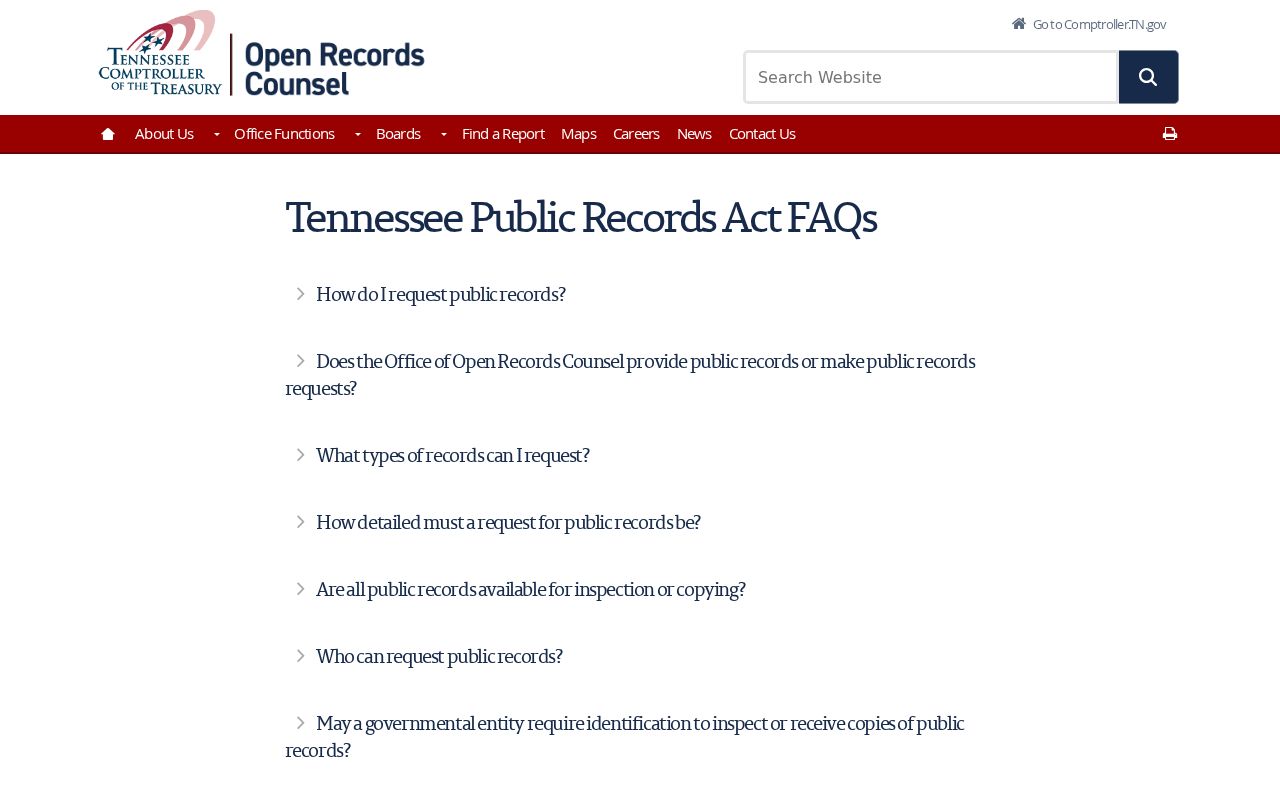
Use the county office's own policy for local instructions and request status.
Newer Moore Warrants Carry Agency Contact Details
A Tennessee law that took effect July 1, 2024 requires phone or contact information for the issuing law-enforcement agency on specified newer warrants. In Moore County, that field helps identify whom to call about a qualifying warrant record. The law does not make the warrant public. It sets no local search system. Older records may lack the same field. The Tennessee General Assembly's HB2023 changed the contact rules in T.C.A. sections 40-6-106 and 40-6-208. Use the named agency details to verify status.
City Warrant Records in Moore County
Census and TigerWeb list Lynchburg, Moore County metropolitan government as the county's only incorporated municipal geography. Because it is a consolidated city-county government, a Lynchburg municipal matter may route through the General Sessions court structure. The city profile explains how to check a citation. It also names which court to call.
Lynchburg Warrant Records
6,461 in 2020 · consolidated municipal court and General Sessions route